

After a three year suspension, Football slowly returns to the West Bank
The Gaza genocide and settler violence in the West Bank brought Palestinian football to a halt. It looks set to return for the 2026/27 season.
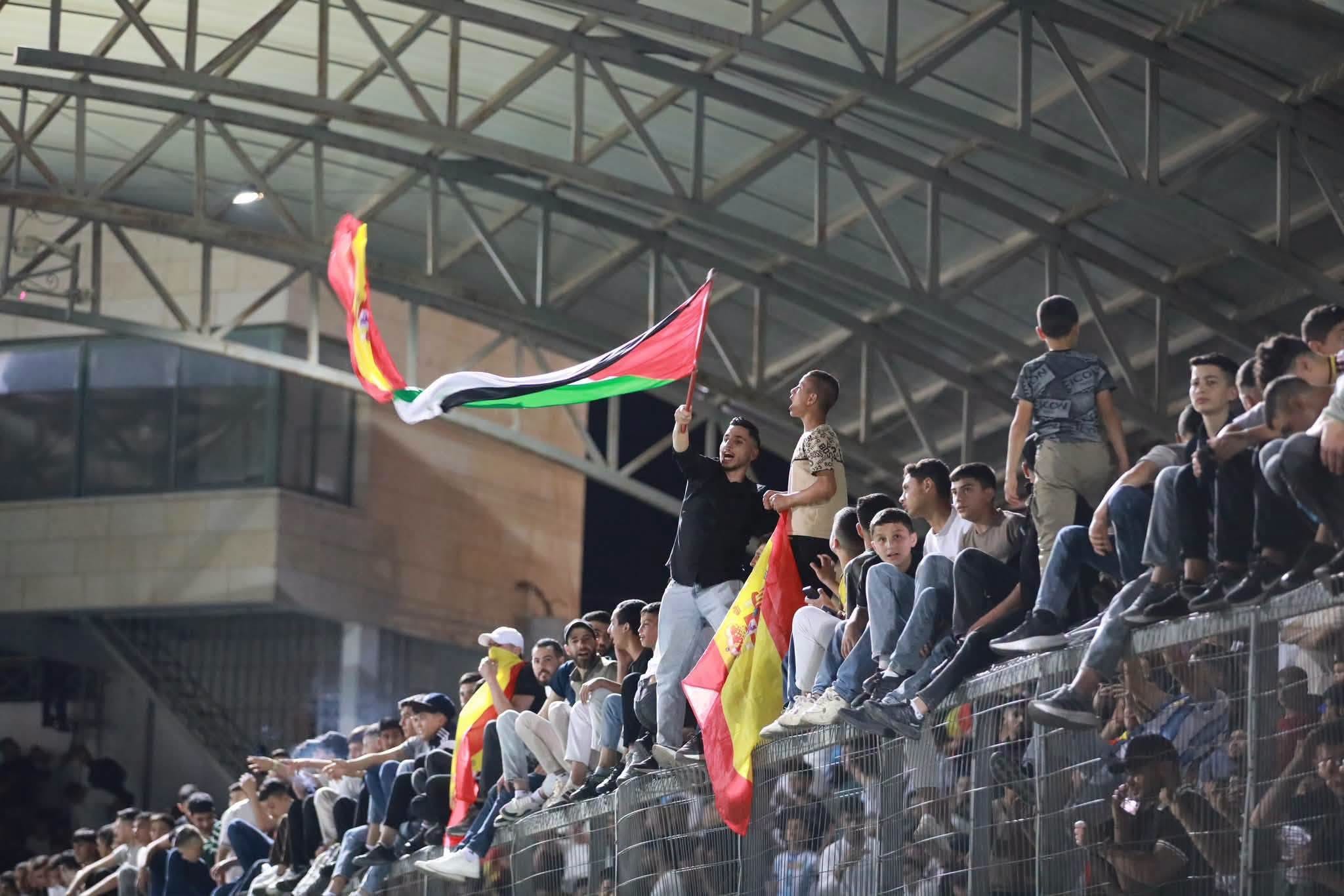
What is the biggest club in Palestine? Well if you ask the average Hebronite the answer is clear Al-Ameed. Shabab Al-Khaleel is seen by most the city’s residents as the general of Palestinian clubs. So when the Palestine Football Association started making noise about the resumption of football activities to the West Bank it was no surprise to see the club spring into action.
A statement of intent was made with the hiring of Abduallah Al-Sidawi away from Hilal Al-Quds to coach the first team. That was followed with the announcement of a series of preparatory friendlies against select sides from Umm El-Fahm, the Negev, and the North. The team won its first game 1-0 and the following matches by a score of 2-1 in front of raucous crowds who took to the streets to celebrate each victory.
The Ali bin Hussein Stadium also hosted a World Cup final viewing party that was attended by an over-capacity crowd. Capitalizing on the fervour, Shabab Al-Khaleel President Mithqal Al-Jabari announced a friendly tournament featuring five other clubs as September- the deadline set by the PFA to resume football- fast approaches.
“The return of sports represents a new beginning for everyone, but it carries many challenges. The long break affected the players’ readiness, so we are working on a gradual plan to restore their technical and physical levels and reach the required readiness before the official competitions begin.” Shabab manager Abdullah Sidawi told Football Palestine.
Shabab Al-Khaleel had gained a reputation for splashy signings in the heyday of the West Bank Premier League (WBPL). The likes of Ashraf Nu’man, Abdelatif Bahdari, Haitham Dheeb, Tamer Seyam, and Rami Hamadi have all been poached from rival clubs- in large part due to the wages on offer.
The club now is striving to take a different approach, one perhaps mandated by the departure of the stars to rival leagues.
“The club’s own players are the cornerstone of any successful project. We are working on developing young players, giving them confidence and the space to prove themselves, while building a balanced mix of experience and dynamism, so that they become the core of a team capable of serving Shabab Al-Khaleel and competing in the years to come” Sidawi explained.
A lack of clarity has meant that betting on youth makes financial and sporting sense. The clubs have been given little information as to how football will be organized in the West Bank where short trips between cities are now taking hours. As such, a home-away format over 22 match days seems unlikely. So do the comparatively hefty salaries that saw the best players earn $60,000 a year.
The teams have been told to prepare for a cup competition called The 1000 Martyrs Cup a reference to the athletes killed in Israel’s genocide of the past three years. Much like when the league was relaunched in 2008 the cup will be used to organize teams into their respective leagues.
Back then, a financial boom in the West Bank was being powered by billions of dollars in aid money. That trickled down to football as well and was used to build stadiums and lure big ticket sponsors. A decade afterwards, the party had ended and clubs were almost exclusively reliant on the PFA for funding.
For all the faults of the WBPL and Gaza League- and there were many- they did provide Palestine with an epic array of talent. When Palestine advanced to the knockout stages of the Asian Cup for the first time, nine out of the eleven starters were products of the local league. As were four out of the five substitutes in that famous 3-0 win over Hong Kong.
The achievements at the last Asian and Arab Cup as well as the team’s run in World Cup qualification has many observers tipping Palestine for a debut at the 2030 FIFA World Cup. That will only come to pass if the league comes back and starts churning out talent. Palestine’s upward trajectory over the past two decades has been underpinned by the little league most turn their nose up at. If that improvement is to continue, then the scenes observed this month in Hebron must become commonplace once again.